Tag:
Mythology
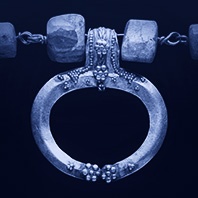
In the Ancient Roman Empire, lunula amulets were often worn as a lucky charm, but also as protection against evil forces and demons. Special crescent-shaped jewelry pieces were made for girls, to grant them the protection of the goddess Diana. Diana is the goddess of the Moon and also of hunting in Roman mythology. Artemis is the equivalent among the Greek Gods.
Read more
Just like with all natives from different countries and continents, the Moon also plays an important role amongst African peoples in myths and stories. In this respect, we have already mentioned other peoples, for example the Native American Indians in America, the Inuit in the far north or the Aborigines in Australia.
Read more
Like all natives of a country, the Native Americans, as inhabitants of the American continent, have a connection to the moon events and the full moon, too. It appears in mythology as much as in the relevant lifestyles. Instead of the term »Native American Indian« the term »indigenous peoples of the Americas« is generally used nowadays. It is strived for to be politically correct.
Read more
The Rumanian fairytale »The shepherd in the Moon« tells the story of a shepherd:
He once came to a rich nobleman and received the gift of a piece of land and a herd of sheep from him. He settled as shepherd and began to play beautiful melodies on his flute at night, which – as you’ll find out later – reminds him of his deceased beloved. These songs were so wonderful that all sheep gathered around him to listen, even the ones of the neighbouring shepherds. They now became envious of the flute player and tried to blacken his name with the nobleman. But when he stuck by the shepherd with the flute, the other shepherds made attempts on the life of the good shepherd and tried to kill him. He escaped and left the country full of grief and pain.
Read more
In June or July of each year, students commemorate their spiritual teachers (Gurus) with a big festival in India, but also in many parts of Asia. This festival is always celebrated at a full moon (Purnima):
3rd July 2012 [*]
22nd July 2013
12th July 2014
31st July 2015
In Hinduism, this day is also dedicated to the wise Vyasa who is connected to vital Indian writings, like the Vedas, a significant collection of religious scripts.
.
Read more
We are tapping again into the treasure chest of Old English stories and have come across the fairy tale »The Buried Moon« or »The Dead Moon«. This piece was published by the Australian historian Joseph Jacobs in 1894, as part of a fairy tale collection, but its origin lies much further back like so many folktales, and has been passed down by word of mouth over the centuries.
Read more
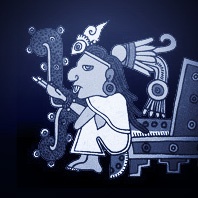
The Aztec were indigenous people (natives), who lived in Central America between the 14th and 16th century, in the area of today’s Mexico. Just like all primordial nations, they had a variety of deities and Tecciztecatl is the god of the moon. Many stories about the Aztec have been passed on, most of them appear sinister and cruel. Also their ending, precipitated by the Spanish conquerors, was bloody and does not belong to the chapters man can boast about. And so, you look to the past with split feelings.
Read more
We are looking again at China, where next to the moon festival in autumn, an event is celebrated at the beginning of the year, which is also connected to the full moon: the Lantern Festival (»Yuanxiao«). This celebration is traditionally held on the 15th day of the first moon month of the old Chinese calendars and therefore coincides (more or less exactly) with the full moon. The Lantern Festival indicates the end of the Chinese New Year ceremonies.
Read more
Selene is the Greek moon goddess, she is a daughter of Hyperion and Theia from the Titans, a race of deities. The two siblings of Selene are Eos (the goddess of dawn) and Helios (the god of the sun). These three, forge the bridge between day and night, the Sun and the Moon, masculine and feminine. Later, in Greek mythology, Selene has also been equated with Artemis, just like Apollo is linked with the sun god Helios.
Read more
In many languages, inside the word for the weekday »Monday« you find the word »moon«, sometimes slightly modified but mostly easily recognised. This does not appear to be a coincidence. But why? Surely, the Moon cannot only be seen on Mondays and no other good reasons comes to mind quickly why a specific day of the weekly cycle should be connected to the Moon.
Read more