Sir Charles Spencer Chaplin (1889–1977) is considered one of the first movie stars ever and made film history with his acting and his works. He is also one of the few artists who managed the transition from silent films to sound films.
Because of using archetypal imagery and symbols in his films, it is natural that the moon could also play a part somewhere. We found four references:
Read more
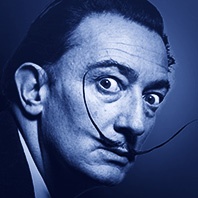
The Spanish artist Salvador Dalí (1904–1989) was the most important advocate of surrealism in paintings. His pictures show fantastic and dreamlike scenes, which remain in your memory due to their expression and originality. We also asked ourselves, whether we would be able to discover the Moon in Dalí as well, just like in other paintings (e.g. by Marc Chagal, Paul Klee, Caspar David Friedrich, William Turner, Adam Elsheimer or Petrus van Schendel)? And after a little bit of searching, we managed to find something.
Read more
In view of the two original principles »feminine« and »masculine«, it is tempting to attribute the feminine, receiving principle to the moon and the masculine, creative principle to the sun. And most languages, where nouns posess articles, do reflect this, like for example the Romance languages (French, Spanish, Portuguese, Italian). However, there are a number of languages, for example German, Norwegian, Polish, Slovenian, Serbian or Czech, where the moon is masculine.
So, does the moon contain more masculine quality, after all, than originally assumed?
Read more
Let’s begin the New Year 2011 with the opening of the full moon blog. A true innovation to the full moon pages.
For everyone, who is not quite sure what a blog is, let’s say it is a kind of an Internet diary. The word »blog« is an abbreviation of »weblog«, which again derives from »web« (for Internet) and »logbook«, a term used in maritime shipping for recording daily events. Interestingly enough, it is mentioned in WIKIPEDIA that logbooks are of great importance in legal cases involving maritime commercial disputes, and therefore mandatory to be kept and not on a voluntary basis. As blogger (name of someone who writes in a blog), we certainly would not keep this rule, but encourage spontaneous participation and think it should be fun, and whenever possible, we will establish a connection to the full moon.
Read more
When inviscid lava flows out of the volcano, it is possible that cavities are created inside the conduits, due to the different speeds of flow and temperatures. It is like a roof being formed above the flow of lava, which continues to flow inside. After cooling of the rocks, tubular cavities remain.
This phenomenon exists on Earth when volcanoes erupt, and scientists assume that those tubes and cavities could also be prevalent on the Moon, dating from a time when vulcanoes were still active there. The lesser gravity benefited the formation of the tubes and might have also contributed to the fact that there could be kilometer-sized cavities underneath the Moon’s surface.
Read more
We have already reported about the subject “Sleeping at the full moon” with the insight that the phenomenon of a restless or bad sleep around the full moon apparently exists for many people, however, we are groping in the dark if looking at the background. Generally, skeptics claim that insufficient sleep is connected to the fact that the people concerned are more or less aware of it being a full moon and therefore eventuate a self-fulfilled prophecy. Those affected, counter that they often find out afterwards whether it was the full moon or it had not occurred to them yet to make this connection at all.
Read more
If you ask two lovers to which city they would like to travel to, to express their love, many will probably name two cities: Paris and Venice. While Paris embodies a variety of aspects of love, being the »city of love« (obviously also the erotic aspect), Venice stands especially for the romantic encounter between people. This must surely be the reason why so many weddings are celebrated and honeymoons are spent there.
Read more
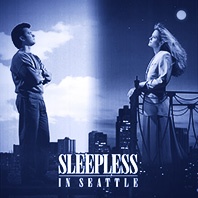
Who doesn’t know this movie, a classic amongst romantic comedies? Shot in 1993, with Tom Hanks as the architect Sam Baldwin and Meg Ryan as the journalist Annie Reed, who do not know each other but are still able to find one another thanks to Sam’s son Jonah, who recognizes that Sam and Annie belong together and for that, he leaves no stone unturned.
On the movie poster, you can see the full moon, just above Meg Ryan and we watched this movie for the 137th time to find out whether the full moon is also visible during the movie – wrong! Neither in the scene where Sam talks to the psychologist on the radio for the first time, while Annie listens in the car, nor in the closing scene in New York, and on the Empire State Building we can see the moonlight shining, although this would have certainly been a gain. Also with reference to the title and the addressed topic of sleeplessness, this would have been an obvious approach.
Read more
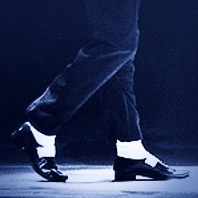
“Moonwalk” is a dance technique which fakes a forward motion by moving legs and feet, while in reality you are moving backwards. This is how the illusion is created that the floor is pulling away in a gliding motion, underneath the feet of the dancer. No other name can be more closely connected to this move than the name of Michael Jackson (who was born on 29th August 1958 on a full moon). Even though he is not the founder, in this case, one can refer to him as the figurehead. The key moment was Jackson’s performance of “Billie Jean” at the anniversary celebration “Motown 25: Yesterday, Today, Forever” in 1983. From this moment on, the moonwalk’s triumph was not to be stopped and Michael Jackson had shaped his signature move.
Read more
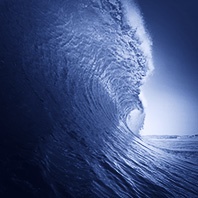
Repeated attempts have been made creating a connection between lunar phases and natural disasters. To our knowledge, it has not been possible so far, to establish nor prove a causal link. Of particular note is the well known earthquake and tsunami in the Indian Ocean in 2004, which happened at the full moon. Was this a coincidence? Were there other tsunamis that occurred during a full moon?
Read more
This is about how to differentiate the waxing moon from the waning moon in the sky. »Waxing« is known to be the lunar phase between the new moon and the full moon (meaning the time when the crescent increases in size), whereas »waning« is known to be the lunar phase between the full moon and the new moon (the time when the crescent decreases in size). In order to remember on which side the curve is, here are some neat mnemonics.
Read more