Sir Charles Spencer Chaplin (1889–1977) is considered one of the first movie stars ever and made film history with his acting and his works. He is also one of the few artists who managed the transition from silent films to sound films.
Because of using archetypal imagery and symbols in his films, it is natural that the moon could also play a part somewhere. We found four references:
Read more
As is generally known, the Moon is not a disc but a sphere and one could ask the question if we actually get to see different sides of this Moon sphere? The answer is: no! At least this is true for the observer from Earth.
Indeed, we always see one half of the Moon. This is because the Moon is locked into the Earth rotation. This is called »synchronous rotation«. It means that we are never able to see the side of the Moon facing away from us. And until it was possible to photograph the reverse of the Moon with space probes, nobody knew what we would find or how it would look.
Read more
Who believes to see a staggering Moon at night, has probably had a drop too much, although a staggering movement of the Moon actually exists in astronomy. This is called »libration«, but happens very slowly and is therefore only visible by the naked eye in time-lapse photography.
The Moon orbits around the Earth in a so called synchronous rotation. This means that it always faces one hemisphere towards the Earth, while the reverse side of the Moon is not visible from Earth. Due to certain physical conditions (relating to orbits, angular velocity, centres of mass, among others), what happens is that the visible surface of the Moon varies slightly during the course of the moon cycle, and there is a gentle change of inclination of the Moon’s axis or it appears to turn a little.
Read more
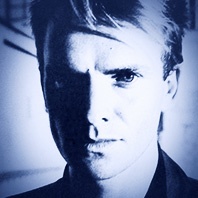
In his first solo album »The Dream of the Blue Turtle« from 1985, Sting published the Song »Moon over Bourbon Street«, which is not just about the Moon. He sings about the existence as a vampire, which he had turned into years ago, and which condemned him to follow passers-by in this street, in the moonlight and the pale lamplight …
It is characteristic for this song that it spares the bloody part of the crime and only leaves an indirect description. The word vampire is also not mentioned, however, it is clearly focused on, for example in the following line: »… you’ll never see my shade or hear the sound of my feet …«
Read more
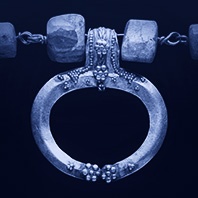
In the Ancient Roman Empire, lunula amulets were often worn as a lucky charm, but also as protection against evil forces and demons. Special crescent-shaped jewelry pieces were made for girls, to grant them the protection of the goddess Diana. Diana is the goddess of the Moon and also of hunting in Roman mythology. Artemis is the equivalent among the Greek Gods.
Read more
We all grew up with stamps. Those small, delicate images which tell stories of countries and events and which can decorate an envelope quite wonderfully. Nowadays, letters are increasingly stamped with bar codes or rolling stamps. Still, the stamps are surviving and occasionally, the moon is to be seen on them. Mostly when a historic space travel event is being celebrated.
Read more
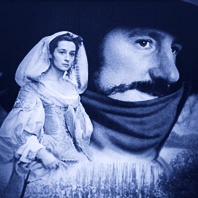
Cyrano de Bergerac (1619–1655) was a French writer, who was less famous for his own pieces [*], but better known through the writings about him by Edmond Rostand (1868–1918) from 1897. The piece was called just like himself “Cyrano de Bergerac” and premiered as a stage play in Paris in the same year.
Up until today, it has been staged and filmed many times. The movie that is surely most famous is the one with Gerard Depardieu in the leading role from 1990. All dialogues are versified, which lends everything a historicizing but also an intense, poetic effect.
Read more
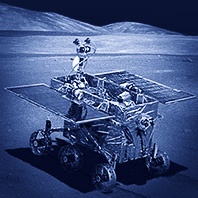
After USA and the Soviet Union, China will be the third nation in the world travelling to the Moon with their space program, and they will probably land there with the astronauts as well in the long term. At the moment, an unmanned spaceship »Chang’e-3« (moon fairy) is on its way to the Moon since 1st December 2013, planning to land in the Mare Ibrium on 14th December and supposed to transport a rover for research purposes of the Moon’s surface. The vehicle is called »Yutu« (jade rabbit).
Read more
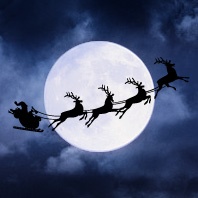
Ho ho ho – not long now and Christmas will bring joy to the hearts of the people and “Santa Claus”, the name of Father Christmas in the United States and many other countries, will ride with his flying sleigh across the sky on Christmas Eve, pulled by his reindeer with plenty of gifts in his huge sack. Looking at this imposing depiction of this nightly sleigh ride, the full moon is quite often found in the sky.
Read more
You always hear that certain things should be done or left undone at certain phases of the lunar cycle, also during a full moon. You can believe it or not. It surely cannot be proven and to be honest, we are quite skeptical with regards to the attribution of human activities and lunar events. However, we would not like to exclude it – after all neither the efficacy nor the inefficacy of such theses has been proven. As long as you don’t get caught in your own convictions, it is part of people’s liberty to create their lives freely.
Read more
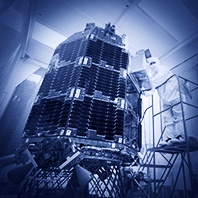
The lunar probe »LADEE« (short for: Lunar Atmosphere and Dust Environment Explorer) of the American space agency NASA, launched successfully into space, for further exploration of the Moon. A probe is an unmanned flying object, which can fly through space or circle orbs and thereby sends data to Earth via radio.
Read more