Sir Charles Spencer Chaplin (1889–1977) is considered one of the first movie stars ever and made film history with his acting and his works. He is also one of the few artists who managed the transition from silent films to sound films.
Because of using archetypal imagery and symbols in his films, it is natural that the moon could also play a part somewhere. We found four references:
Read more
There are currently precisely six American flags on the Moon, which were left behind by the respective astronauts at the moon landings of the Apollo missions 11,12,14,15,16, and 17. The flag of the Apollo 11 mission led the way. On 21st July 1969 at 03:56 am (CET), Neil Armstrong was the first human to set foot onto our Moon and spoke the legendary sentence: »That’s one small step for (a) man … one … giant leap for mankind«. Together with his colleague Buzz Aldrin, he then planted the first flag on the Moon, which was apparently not so easy, due to the space suits, the pole rods and the condition of the ground.
Read more
Even though the idea would be wonderful: this is not about trees that grow on the Moon, but about trees on Earth that grew from seeds, which orbited the Moon exactly 34 times, in a small canister, during the Apollo 14 mission in 1971. For this joint project by NASA and USFS (US Forest Service), the astronaut Stuart Rosa took hundreds of tree seeds with him on this journey. Seeds of five different species of tree had been chosen: loblolly pine, sycamore, sweetgum, redwood and douglas fir. The seeds survived the weightlessness and also when the canister that contained the seeds, got destroyed in the vacuum of the decontamination chamber. The seeds had to be picked up individually after this incident.
Read more
 When looking up to the full moon, you see a sphere and there is no doubt: the Moon has to be round. And we assume quite simply that a sphere is orbiting our Earth. This is correct indeed, if taking a lax approach in the definition of a sphere. The Moon is spherical, but differs considerably from the perfect shape. On the one hand it is flattened at the North Pole and South Pole, and on the other hand, its reverse side, which is turned away from the Earth, is convexed outwardly.
Read more
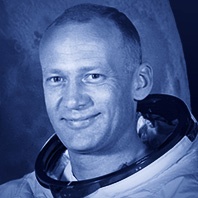
Buzz Aldrin (* 1930) is an American astronaut and the man, who, as part of the Apollo 11 mission on 21st July 1969, stepped onto the Moon as the second person, just after Neil Armstrong. He stood in the shadow of his colleague and one could assume that he may have suffered under these circumstances. But this was not the case, he did not really want to be in the spotlight and was satisfied coming second. After he set his feet into the dust 20 minutes after Armstrong did, he said: »Beautiful, beautiful. Magnificent desolation.«
Read more
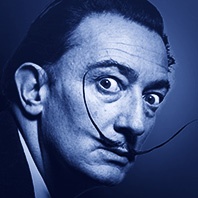
The Spanish artist Salvador Dalí (1904–1989) was the most important advocate of surrealism in paintings. His pictures show fantastic and dreamlike scenes, which remain in your memory due to their expression and originality. We also asked ourselves, whether we would be able to discover the Moon in Dalí as well, just like in other paintings (e.g. by Marc Chagal, Paul Klee, Caspar David Friedrich, William Turner, Adam Elsheimer or Petrus van Schendel)? And after a little bit of searching, we managed to find something.
Read more
When observing the Moon, you can see dark spots on its surface. In the old days, these were thought to be the seas and oceans just like on Earth, so they were called »mare« (plural: »maria«). Giovanni Riccioli (1598–1671), an Italian priest and astronomer was leading in this area and was responsible for giving many lunar maria their Latin or partially poetic names. We would like to single out a few that we consider to be worthwhile mentioning.
Read more
The German poet and novelist Joseph Freiherr von Eichendorff (1788–1857) counts among the foremost representatives of Romanticism. Many of his poems had been set to music and were sung.
Von Eichendorff, born in Ratibor (today Racibórz in Poland), studied originally law and worked in a variety of administrative civil service positions, up until he retired. Simultaneously, he devoted his time to his writing and publishing skills, until he died from pneumonia in 1857.
Read more
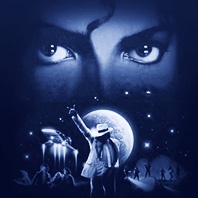
“Moonwalker” is a musical film from 1988 starring Michael Jackson. The movie is a wild and trendy mixture of music videos, live concert recordings, action scenes, science fiction effects and cartoons – so less of a classical movie, but more so an anthology. The plot revolves around how Michael saves three children (i.e. played by Sean Lennon, John Lennon’s son) and the children of the world from the deadly intrigues of the villain Mr. Big (played by Joe Pesci).
Read more
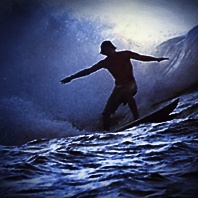
When natural forces are involved, people are mostly torn between fear and fascination. They are looking for the challenge to come into contact with these forces. At the same time, everyone has to respectfully recognize these elemental forces, sooner or later. This becomes impressively apparent in surfing, when a person is gliding on a metre high wave on a surf board. If he manages to stay in front of the crest, and not to be rolled over by the breaking of the wave, he is the winner and in the belief to control the element. If he is not able to do so, it mostly turns dangerous or at least uncomfortable. It is a risky game.
Read more
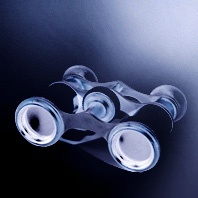
Let us still stay with the music for a little while and let us bring our attention to a grand musical genre of theatre, the opera. We recently saw TOSCA (from Puccini) in Madrid and lo and behold! In the first act, we suddenly heard »luna piena«, which is Italian for full moon. A real highlight!
Then we had the idea to rummage through some libretti (opera lyrics) to find out if the full moon motif may also play a part in other operas. For this purpose, one can view the libretti online. We were interested in particular in the actual mentioning of it, as these were created by the composers themselves, whereas the appearance of the full moon on stage was usually the part of the stage designer.
Read more