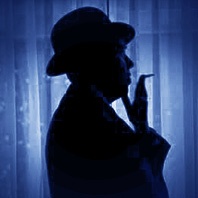
Sir Charles Spencer Chaplin (1889–1977) is considered one of the first movie stars ever and made film history with his acting and his works. He is also one of the few artists who managed the transition from silent films to sound films.
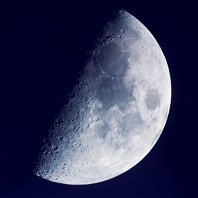
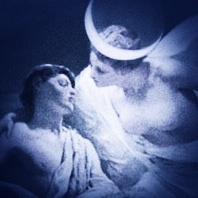
Because of using archetypal imagery and symbols in his films, it is natural that the moon could also play a part somewhere. We found four references:
Read more
Towards the end of the 18th century, over 200 years ago, Germany was about to be conquered by a new style of painting: the romanticism. The objective was, just as we understand it today, to emphasise feelings. But it was much more than this …
It was about the self-conception of an entire generation of artists, poets and musicians, who were trying to oppose the, up until then, reigning reason of the enlightenment era and also the classicism that was concerned with order. They countered with irrational contents i.e. fantasy, infinity or transcendency. It was what Wassily Kandinsky (1866–1944) expressed about the artist in general at a much later point in time: “The fortune of an artist is the possibility, to express longing in forms.”
Read more
No, this is not about another sequel of the science fiction movie or whether Arnold Schwarzengger is planning a trip to the moon … It is more about an astronomical term, where »terminator« describes the day-night border of a celestial body. This is the visible border between the illuminated side and the dark side of the object, being the border between day and night on the celestial body. The word »terminator« derives from Latin »terminare« = conclude, restrict.
Read more
Again and again it is spoken about the Moon in the night sky, and the visible size for us here from Earth and we would like to recall some details or outline and summarize them again:
The Sun and the Moon about the same size in the sky
The full moon in the sky appears to have almost the same size as the Sun by day, because the Sun is approx. 400 times as large as the Moon, but also 400 times further away. So it balances itself out and this is how these two very different sized orbs appear to be of the same magnitude to us.
Read more
The Belgium painter René Magritte (1898–1967) was next to Salvador Dalí, one of the most influential painters of surrealism. This denotes a style in art (and in other areas), which has tried to use dreamlike, fantastical and absurd elements as techniques of expression for a new superior reality, since the 1920s.
Read more
Selene is the Greek moon goddess, she is a daughter of Hyperion and Theia from the Titans, a race of deities. The two siblings of Selene are Eos (the goddess of dawn) and Helios (the god of the sun). These three, forge the bridge between day and night, the Sun and the Moon, masculine and feminine. Later, in Greek mythology, Selene has also been equated with Artemis, just like Apollo is linked with the sun god Helios.
Read more
Many people dream about making a journey into space sometime, or setting foot on a celestial body. And despite the fascinating images and movie footages we are able to enjoy here on Earth, the wish remains to experience this sight for ourselves. The German scientist and astronaut Ulrich Walter, recently related that the view onto the Earth in weightlessness and the realization not to be the centre, would change the individual thinking in a profound way. »Up there« in space, he was always happy.
Read more
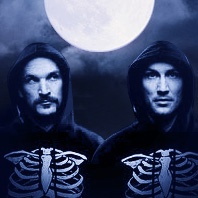
There are quite a few full moon songs, with Frank Sinatra’s »full moon and empty arms« leading the way, from 1945, which was inspired by Rachmaninoff’s piano concert No. 2 (you can hear this in the comparison). A newer example would be the »full moon song« by Peter Bradley Adams from 2011, or the song »full moon« by the British music duo The Black Ghosts (Theo Keating and Simon William Lord) from 2006, which achieved a high level of publicity in 2008 as the soundtrack of the movie »Twilight«. The song may have probably not been that successful, if the music supervisor Alexandra Patsavas hadn’t chosen it for the soundtrack.
Read more
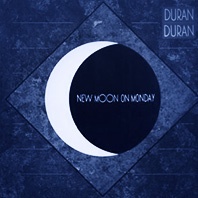
In 1984, the song »New Moon on Monday« was released by the British music group Duran Duran. This was deep in the 80’s, when men and women artistically draped their hair and wore gear that makes you chuckle looking at them from today’s perspective. The ambitious music video tells the plot of an underground rebel group called »La Luna«, who fight against a military regime, and who call upon the power of the Moon to help them. Back then, this was shot in the French village Noyers with great efforts during winter temperatures.
Read more
On Wednesday, 15th June 2011 (or Thursday 16th June for certain time zones) is full moon and a total lunar eclipse at the same time. However, it will only be completely visible in the Near and Middle East. In Asia and Australia, the moon will be already set and in Europe and Africa, the moon will be just rising by the time the lunar eclipse takes place. In America, this event won’t be visible at all.
Read more
The word »mooncalf« is connected to a sad story, because in earlier centuries it was used for calves that were born malformed. It was assumed that the Moon was responsible for this, which was generally seen as a symbol of the feminine and dark side of life. Not exactly fair toward the Moon and unfortunately characteristic for the attitude wanting to assign the good to the masculine and the evil to the feminine.
Read more